









The mangroves of Madagascar
The mangroves
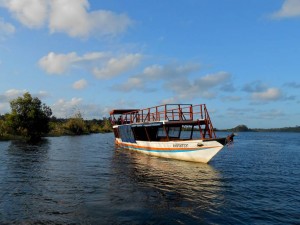
 While in most parts of the world, oceans gnaw the coast, mangroves they advance to the sea and are “back.” Mangroves are found in tropical areas of the globe and its most characteristic trees are mangroves with their buttress roots that allow them to be anchored to the bottom and resist tidal. In the western Indian Ocean, Madagascar has the largest area of mangrove with nearly 330 000 ha of which 97% on the west coast. Few species of mangrove trees are is a difficult environment to access, cluttered with pneumatophores and stilt roots, on a muddy bottom.Les mangroves
 Si dans la plupart des endroits du globe, les océans rongent le littoral, les mangroves elles avancent sur la mer et la font “reculer”. Les mangroves sont rencontrées dans les zones tropicales de l’ensemble du globe et ses arbres les plus caractéristiques sont les palétuviers avec leurs racines échasses qui leur permettent de s’ancrer au fond et de résister au balancement des marées.
Dans l’ouest de l’océan Indien, Madagascar présente la plus grande surface de mangrove avec près de 330 000 ha dont 97 % sur la côte occidentale. Peu d’espèces d’arbres constituent la mangrove qui est un milieu difficile d’accès, encombré de pneumatophores et de racines échasses, sur un fond vaseux.
The mangroves of Madagascar Read More »
The mangroves
While in most parts of the world, oceans gnaw the coast, mangroves they advance to the sea and are “back.” Mangroves are found in tropical areas of the globe and its most characteristic trees are mangroves with their buttress roots that allow them to be anchored to the bottom and resist tidal. In the western Indian Ocean, Madagascar has the largest area of mangrove with nearly 330 000 ha of which 97% on the west coast. Few species of mangrove trees are is a difficult environment to access, cluttered with pneumatophores and stilt roots, on a muddy bottom.Les mangroves
Si dans la plupart des endroits du globe, les océans rongent le littoral, les mangroves elles avancent sur la mer et la font “reculer”. Les mangroves sont rencontrées dans les zones tropicales de l’ensemble du globe et ses arbres les plus caractéristiques sont les palétuviers avec leurs racines échasses qui leur permettent de s’ancrer au fond et de résister au balancement des marées.
Dans l’ouest de l’océan Indien, Madagascar présente la plus grande surface de mangrove avec près de 330 000 ha dont 97 % sur la côte occidentale. Peu d’espèces d’arbres constituent la mangrove qui est un milieu difficile d’accès, encombré de pneumatophores et de racines échasses, sur un fond vaseux.

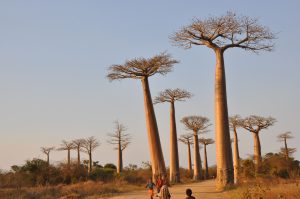
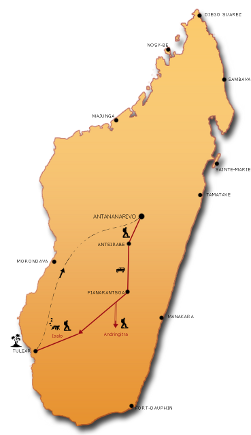
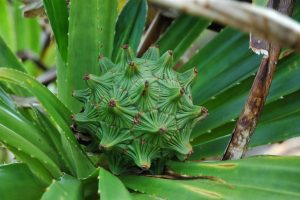
 There is no real rainy season , these being an occasional basis . The annual rainfall does not exceed 500 mm in some areas of the South West . If large trees are still encountered in places such as baobab and tamarind , vegetation forms a thorny thicket. This is more or less filled up, dominated by the largest species of the family didiéracées or white latex of Euphorbia , typical of the south. Other notable features include the Pachypodium some species can reach several meters high , recalling the baobabs, or kalanchoes (pronounced ” Kalankoé ” ), some species are locally called ” big ears ” to translate the strange shape for large thick leaves .
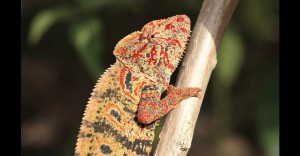
 The Big Island has one of the most extraordinary botanical and faunal assemblages curiosities monde.Sur Botanically, some facts and figures are enough to show that wealth:


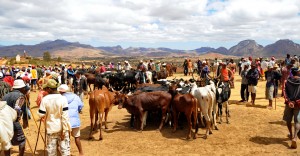
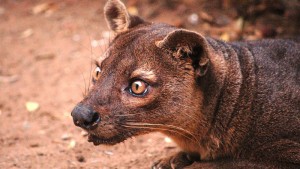
 Apart from the lemurs, Madagascar is home to a peculiar mammalian fauna . Above all, it should be noted the absence of large African herbivores and large predators such as Felidae . Zebu are of African origin and bush pigs . Among small mammals include the insect belonging to the family of tenrecs ( Tenrecidés ) .
 A part les lémuriens, Madagascar abrite une faune assez particulière de mammifères. Avant tout, il faut remarquer l’absence des grands herbivores africains et des grands prédateurs tels que les Félidés. Les zébus sont d’origine africaine ainsi que les potamochères. Parmi les petits mammifères, on peut citer les insectivores
 Malagasy amphibians are represented only by the frogs belong to the order Anura ( “tail ” ) . There is therefore no newt or salamander ( order Urodela , typical of the Northern Hemisphere ) .
 Invertebrates (animals without backbones) represent about 95% of all animal species on Earth. From the separation of Gondwana, an incredible number of invertebrates have evolved in Madagascar. Today nobody really knows their number, but it would be more than 100,000.
 Dans les forêts pluviales de l’Est, on peut citer la présence de millepattes ou iules qui sont très colorés (jaunes, rouges), caractère qui indique que ces invertébrés sont toxiques pour de potentiels prédateurs. Les scorpions comptent parmi les rares animaux dangereux pour l’homme (rarement mortels).
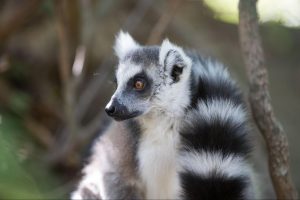
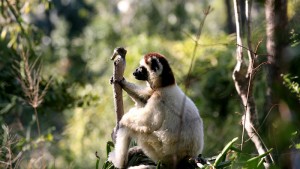
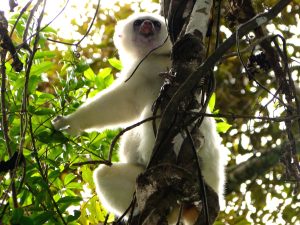
 We can not talk without speaking Madagascar lemurs: all primates mammals constituting a sub- order , also known as prosimians , ranging from the insectivorous mammals and monkeys. Most, like lemurs and aye-aye live only in Madagascar , but other species are also found in some African tropical forests ( in the case of bush babies ) or Asian (for tarsiers and lorises ) . There are to date more than one hundred species of lemurs. The smallest are barely the size of a mouse ( lemur ), while the biggest reach about 40 cm (or , for the Indri indri , more than 50 cm ) for some 5-6 kgs .
 On ne peut pas parler de Madagascar sans parler des lémuriens: ensemble de mammifères primates constituant un sous-ordre, également appelés prosimiens, se situant entre les mammifères insectivores et les singes. La plupart, comme les lémurs et l’aye-aye, vivent exclusivement à Madagascar, mais d’autres espèces
