






















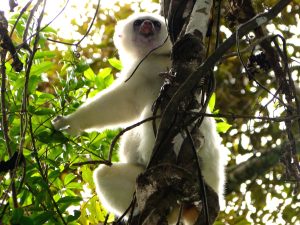










As part of the order of primates, Indri Indri is notorious for being one of the most endangered lemurs. classified CR A3cd (In critical danger of extinction) by the International Union for Conservation of Nature (IUCN), this lemur make the object of a significant pressure on its habitat, so the chances of not seeing that species extinguished is now only into the national park of Andasibe-Mantadia and a few other rare Madagascan forests.
The species Indri Indri
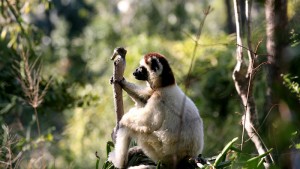
Belonging to the order of the primates and to the infra branches of Lemuroidea, Indri Indri is an uncommon species which distinguishes itself from other species of endemic lemurs of Madagascar, in particular by the absence of tail, but also by its behaviour
In fact, besides the physical feature of his stump of less than 3 cm tail making office of tail, distinctive sign that differentiates it from its congeners, Indri Indri also has wholly manners, one of the main characteristics is manifested through dissonant songs, intended to signal its presence and its territory.
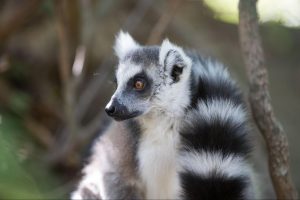
In the shadow of the notoriety of the Lemur Catta, which is an emblem of the great island, and even embodied a famous character in the film Madagascar, the Indri remains one of the most intriguing species of lemur that is found in Madagascar.
Rare, different from other lemurs of the great island by its size, behaviour and diet, the Indri is a species to be discovered, especially as it is one of the most vulnerable, whose extinction could happen shortly.
Where can we observe the Indri?
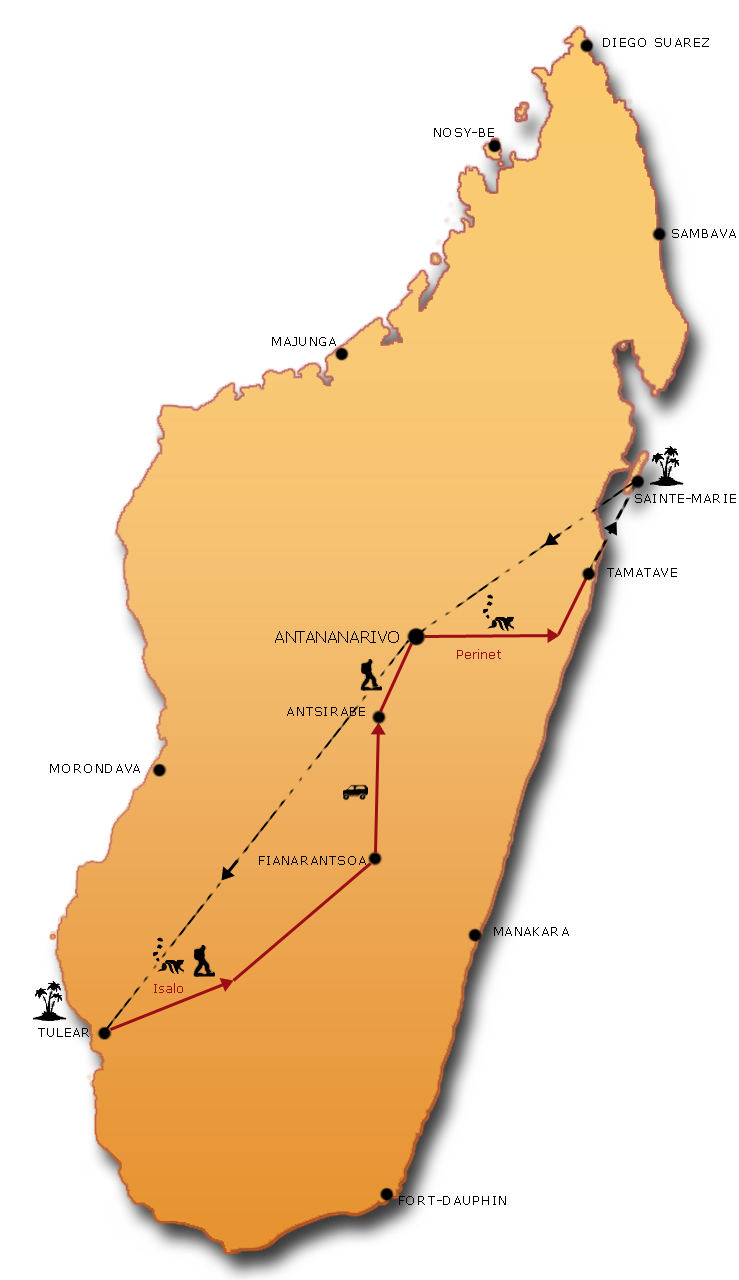
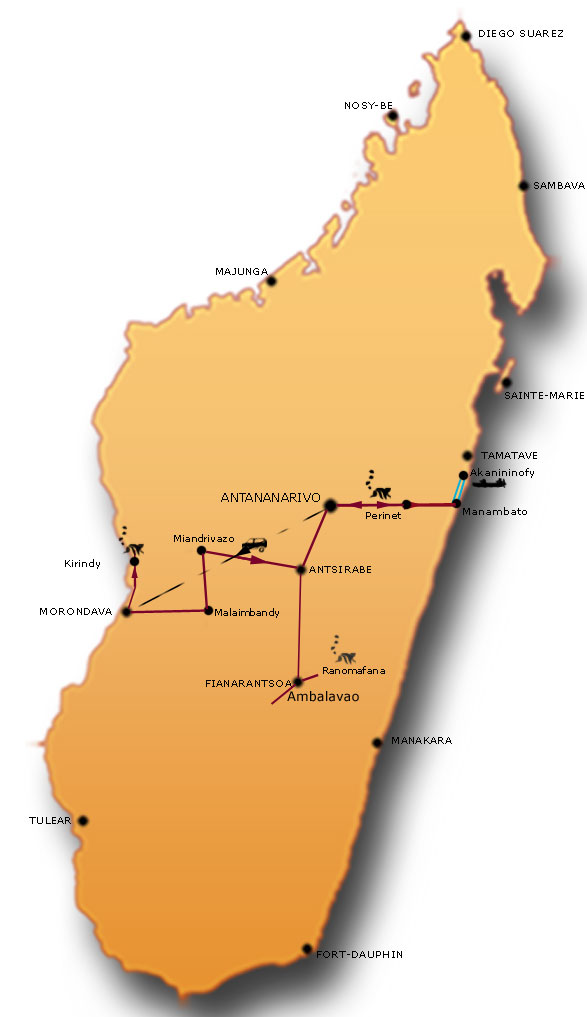
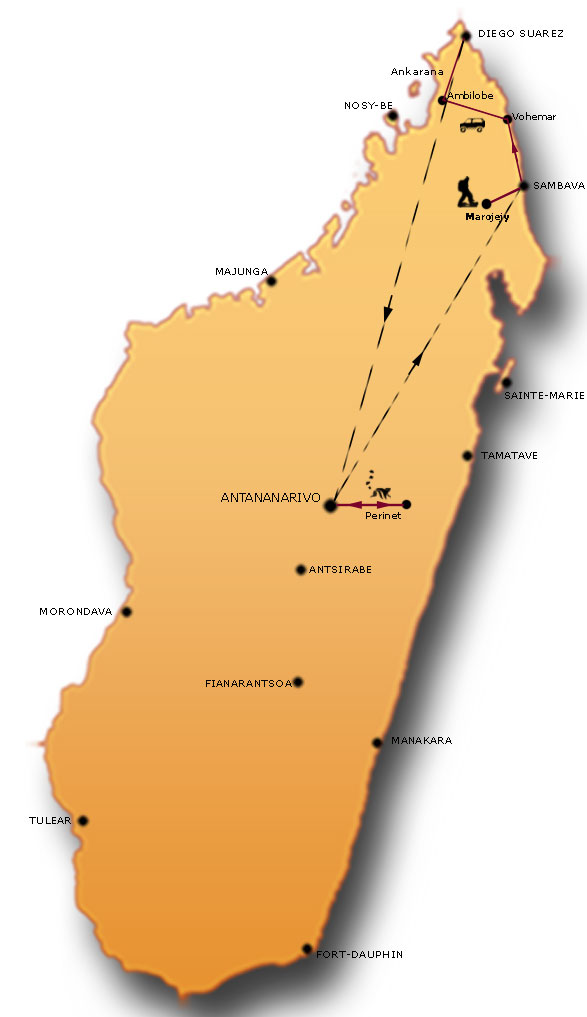
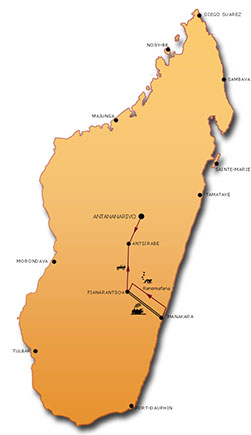
 Endemic to eastern Madagascar, the Indri can be seen in Andasibe-Mantadia National Park, in the Marimizaha forest in Marojejy National Park, but also less likely in Perinet Park.
These are the only places where the Indri can be observed. These parks are the only refuge left to them, the only guarantees for their livelihood.
If certain species, in spite of their status of endangered species, can count on a zoological conservation environment, it is not the case of the lemur Indri Indri, of which the preservation in captivity is extremely difficult, in particular because of its food which must be very varied.
Indri indeed needs, at least, around thirty species of different sheets so that its food diet is satisfactory.
Knowing that in its natural environment, Indri can consume up to about sixty species of different sheets, it seems obvious that the conditions of his diet may not be reproduced in a captive environment.
Behaviour of the Indri
Spending most of their time high in the trees of tropical forests of eastern Madagascar, the Indri lemurs, also called Babakoto by locals, are territorial animals living in small groups led by the Indri females.
These groups usually begin their day by singing indicating their presence to more than three kilometers away.
The different groups of people living nearby communicate almost daily through exchanges of vocalizations, whose astonishing character has even been a study to understand the full scope.

Wide angle on Madagascar

The INDRI: a lemur LIKE NO OTHER

The INDRI INDRI

Madagascar identity card

The baobab of madagascar

The mangroves of Madagascar

Forests and thickets

Flora

Reptiles | Madagascar

Birds of Madagascar

